
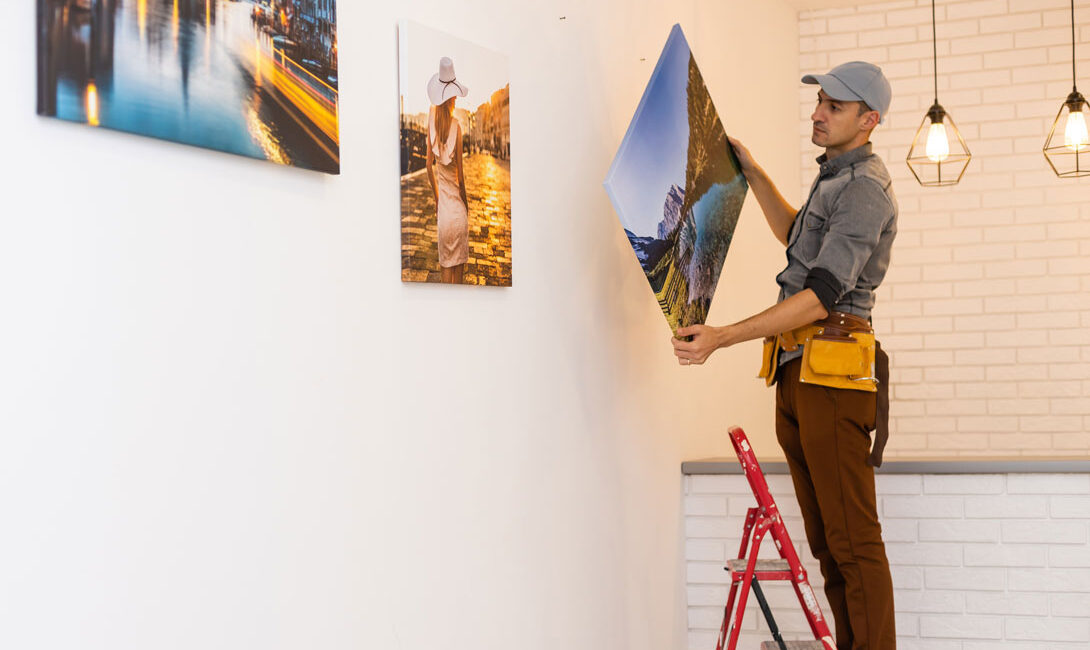
Hanging a painting might seem as simple as hammering in a nail — but getting the height right makes all the difference between “gallery-style sophistication” and “something feels off.”
Whether you’re placing a single piece above your couch or curating an entire wall, the right height is key to how the artwork connects with the room and its viewers.
Here’s a practical, design-savvy guide to help you choose the perfect height for your art.
🎯 Why Height Matters
A painting isn’t just decoration — it’s part of the visual flow of your room. Hang it too high, and it floats awkwardly above the furniture. Too low, and it can feel cramped or disconnected.
Think of hanging art like hanging eye contact: it should meet the viewer naturally, not make them tilt their head up or crouch down.
👁️ General Rule: Center at Eye Level (57–60 Inches)
Interior designers and galleries tend to follow one simple guideline:
✅ The center of your artwork should be 57 to 60 inches from the floor.
This aligns the artwork with average human eye level and ensures a natural, balanced view — whether standing or passing by.
You can measure it like this:
- Measure the height of the artwork (including frame).
- Divide that number by 2 (to find the vertical center).
- Measure the distance from the top of the frame to the hanging hardware (e.g., wire when taut).
- Subtract that from the center height.
- Hang your hook at that height from the floor.
📏 Example:
If your painting is 24″ tall and the wire sits 4″ below the top:
→ 24 ÷ 2 = 12″
→ 12 – 4 = 8″
→ Hook should be at 57″ + 8″ = 65″ from the floor
🛋️ Adjust for Furniture
When placing artwork above furniture like sofas, beds, or sideboards, the “eye-level rule” can shift slightly. You want a visual connection between the painting and the furniture.
🛋️ Leave 6–10 inches of space between the bottom of the art and the top of the furniture.
This creates a comfortable link without cramming the space or making it feel top-heavy.
📐 For Gallery Walls
If you’re building a multi-piece gallery wall, treat the entire arrangement as a single unit and center that unit around eye level. Keep consistent spacing between pieces (usually 2–3 inches), and make sure edges align cleanly when needed.
Tip: Lay it out on the floor first or use paper templates on the wall before committing.
🪜 High Ceilings or Tall Walls?
Don’t be tempted to push artwork toward the ceiling just because you have the space. High ceilings offer breathing room, but paintings still need to relate to the viewer and furniture.
💡 Stick with the 57–60″ center guideline and scale up the size of the artwork to fit the space.
👨🔧 When in Doubt, Ask a Pro
If you’re unsure where to hang something — or if you’re working with stairwells, stone walls, oversized pieces, or galleries — it’s worth hiring a professional art installer.
They’ll assess proportions, surface type, lighting, and furniture layout to hang everything precisely and securely.
✅ Final Takeaway
The “right” height for hanging a painting isn’t just a number — it’s about balance, relationship to space, and ease of viewing. Start with the 57–60 inch rule, adjust for context, and don’t be afraid to get creative (or call in help) for unique walls or larger installations.
Need help placing your art exactly where it belongs?
📩 Contact ArtInstallPros for expert art hanging services in NYC, the Hamptons, and beyond.